.png)
Utilities are experiencing increasing strain in an area that directly affects both revenue flow and customer experience: utility billing and payments.
Rising operational costs, greater customer scrutiny, and higher expectations for digital access have reshaped what was once a routine monthly interaction. Billing is no longer a back-office function—it is a primary moment of engagement where clarity, trust, and ease of action shape the payment experience.
When the billing experience is difficult to navigate, the impact is immediate: delayed payments, more calls and emails, and a higher cost to serve.
How utilities can improve the billing and payment experience
To improve the billing and payment experience, utilities should reduce customer uncertainty at bill presentment, keep the path to payment uninterrupted, and make digital options easy to find and trust.
- Clarify billing presentment: Amount due, due date, changes vs. last bill, and what to do next.
- Place “Pay now” actions next to the explanation: Customers don’t have to hunt for steps.
- Use a single customer portal view: Connect bill review, account access, and payment.
- Increase digital payments adoption: Remove extra logins and handoffs.
- Reinforce trust: Offer consistent branding and clear, verifiable instructions across all channels.
The billing experience now determines payment behavior
The bill represents the point at which customers evaluate usage, charges, and any recent changes. It is also where uncertainty often begins.
When information is unclear or poorly structured, customers hesitate. They reread the bill, look for confirmation, or contact support—often delaying payment until confidence is restored.
This hesitation does not remain isolated. It extends into operational strain through:
-
Increased inbound service inquiries
-
Delayed payment cycles
-
Higher reliance on follow-up communications
Utilities that improve clarity at the point of presentment reduce this friction before it escalates.
Payment delays often originate earlier than expected
Late payments are frequently addressed through collections strategies. However, the origin is often earlier in the process.
Customers delay action when they are uncertain about:
-
The accuracy of the amount due
-
Changes compared to prior billing cycles
-
Available payment options or next steps
If these questions are not resolved within the billing communication itself, the path to payment becomes less direct.
Utilities that address explanation and action within the same interaction tend to see more consistent payment behavior and reduced dependency on reactive outreach.
Fragmentation between bill presentment and payment
Many utilities have introduced digital billing and online payment capabilities. Yet the experience between reviewing a bill and completing a payment often remains disconnected.
Customers are commonly required to:
- Exit the billing view to access a separate payment system
- Authenticate again across multiple environments
- Navigate through several steps to locate the correct payment option
Each additional step introduces friction. Customers do not distinguish between systems or internal processes. They expect a continuous, uninterrupted experience.
When continuity is absent, more customers abandon the process or switch channels—resulting in slower cash flow and more follow-up work.
Digital payment adoption depends on simplicity
The availability of digital payment options does not guarantee adoption.
Customers consistently choose the path that requires the least effort. If digital channels are not clearly presented or easily accessible, they revert to traditional methods or postpone payment.
Utilities are therefore shifting focus from expanding payment channels to improving how those channels are accessed and experienced.
A direct, intuitive path from bill to payment carries greater influence than the number of available options.
Trust has become a decisive factor
Billing and payment communications are increasingly targeted by fraudulent activity. This has introduced a level of caution that directly affects engagement.
Customers may hesitate to act on legitimate communications if they appear inconsistent or unfamiliar.
Utilities can reinforce trust through:
- Consistent formatting across print and digital communications
- Recognizable messaging and branding
- Clear, verifiable instructions
When trust is compromised, payment behavior becomes more conservative, often resulting in delays.
What utilities are prioritizing now
Utilities that are modernizing the bill-to-payment journey are not adding complexity. They are refining the experience. Their focus typically includes:-
Structuring billing information to reduce uncertainty
-
Bringing explanation and payment pathways closer together
-
Simplifying access to accounts and payment options
-
Maintaining consistency across communication channels
-
Reducing the steps required to complete a payment
These adjustments may appear incremental, yet they produce measurable improvements in both customer response and operational efficiency
Where DataOceans fits in the billing and payment process
DataOceans helps utilities connect billing communications to the next best action—so customers can move from understanding the bill to completing payment with fewer steps.
Through Statement Manager and the Customer Portal, you can:
- Present information in a clear, structured format
- Deliver consistent communications across print and digital channels
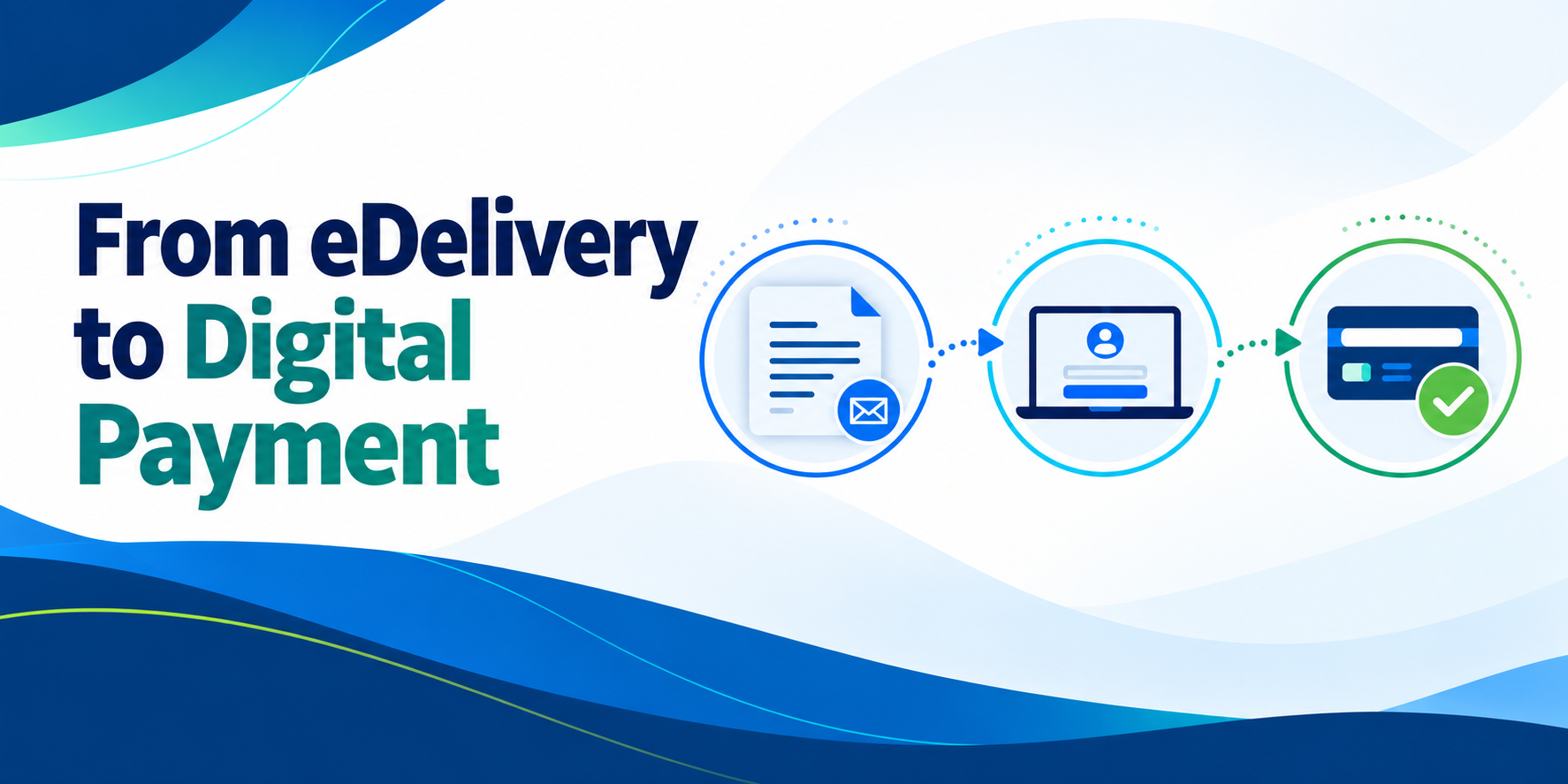
- Guide customers from bill presentment directly to payment pathways
- Support notifications and reminders that reinforce timely action
- Provide secure, accessible environments for account management and payment
- Accelerate payment completion
- Lower service demand
- Improve overall customer experience
- Reduce reliance on costly follow-up processes
This approach does not rely on replacing core systems. It focuses on improving how information is presented and how customers move from understanding to action.
Billing and payment now form a single interaction
The distinction between billing and payment is no longer operationally useful. Customers experience these as a single interaction.
Utilities that reduce friction within this interaction are better positioned to:
Those who maintain disconnected processes continue to manage the downstream effects.
See what a connected billing and payment experience looks like
For utilities seeking to improve payment outcomes and reduce operational strain, the structure of the experience is critical.
A well-configured customer portal brings billing presentment, account access, and payment into a single environment. This reduces effort for customers and creates a more reliable path from message to action—improving utility billing and payment outcomes without adding operational complexity.
Schedule a demo of our billing and payment solution, built for utilities to see how you can simplify billing, improve payment experiences, and support digital engagement through a more connected approach.