Consumer lenders have invested heavily in digital payment capabilities over the past decade.
Borrowers can make payments online, enroll in autopay, and access a growing range of digital services. Yet many lenders continue to face familiar challenges:
- Low eDelivery adoption
- Rising print and postage costs
- High servicing call volumes
- Limited borrower engagement with digital channels
The problem is often not the payment process itself. It is everything that happens before the payment.
Before borrowers act, they typically need to review a statement, check their balance, access account documents, understand a notice, or update how they receive communications. When those tasks are difficult, borrowers often turn to the call center for assistance.
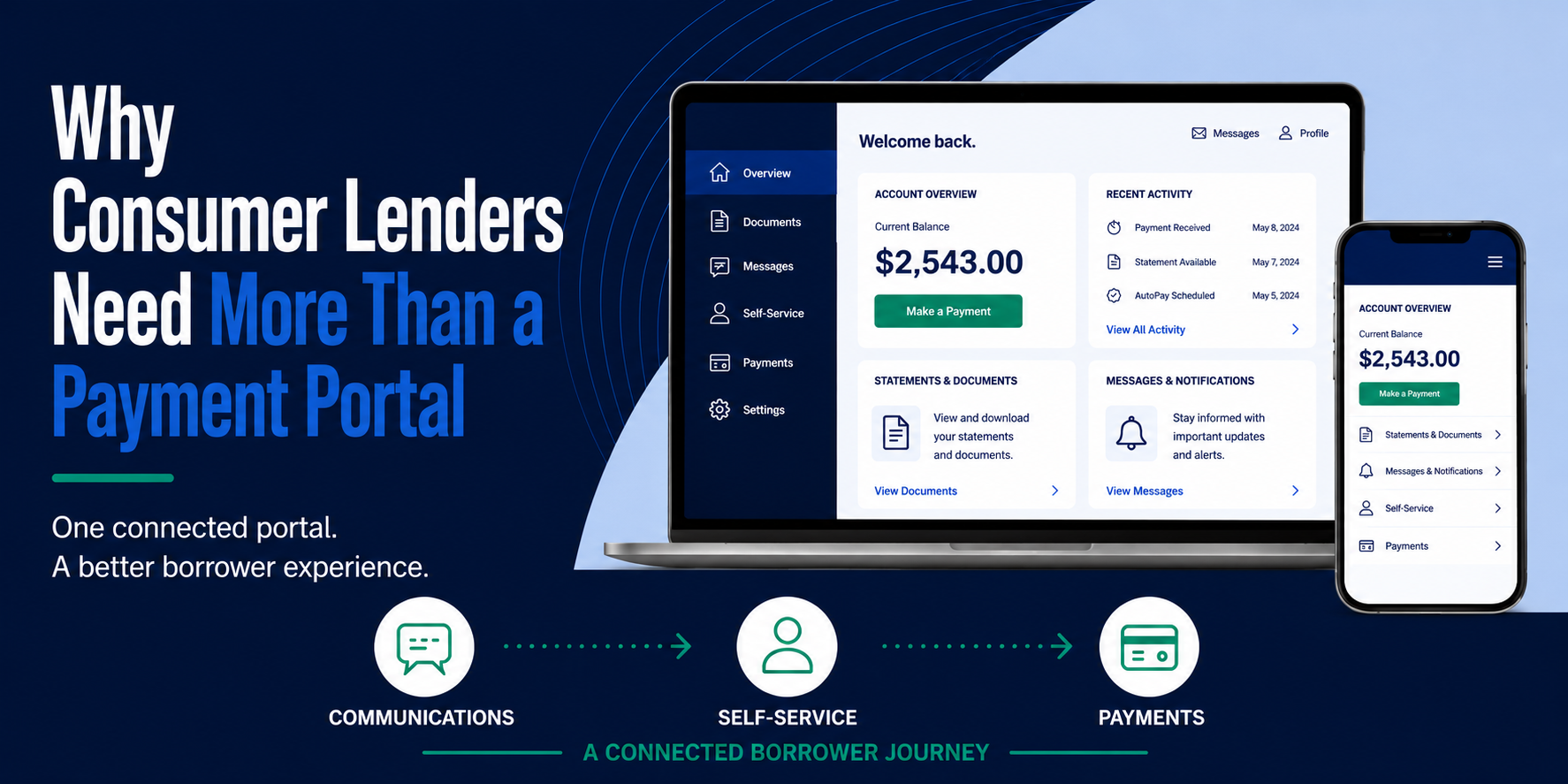
That is why many lenders are looking beyond payment functionality and investing in customer portals that connect customer communications, self-service, and payment capabilities into a single borrower experience.
What Self-Service Capabilities Should a Customer Portal Include?
A customer portal gives borrowers secure access to account information and self-service tools, making it easy to manage their accounts online.
Depending on the implementation, borrowers may be able to:
- View billing statements and account documents
- Access communication history
- Manage communication preferences
- Receive email or SMS notifications
- Review payment history
- Update profile information
- Make one-time or recurring payments
The goal is simple: make it easier for borrowers to find information, manage their account, and act without contacting customer service.
How Is a Customer Portal Different from a Payment Portal?
|
Payment Portal |
Customer Portal |
|
Focuses on payment completion |
Supports ongoing account management |
|
Primarily transaction-focused |
Provides self-service capabilities |
|
Displays payment information |
Provides access to documents, notifications, and account information |
|
Limited borrower engagement tools |
Supports ongoing digital engagement |
|
Payment-centric experience |
Relationship-centric experience |
Payment functionality remains important. However, payment is often the final step in a much longer borrower journey.
Borrowers typically need information before they take action.
Why Do Borrowers Need More Than Payment Access?
Borrowers do not think about communications, account information, and payments as separate experiences.
They simply want to:
- Understand what they owe
- Access relevant documents
- Review account activity
- Receive timely notifications
- Make payments when needed
When these activities are disconnected across multiple systems, friction increases.
A customer portal helps create a more connected experience by bringing together account information, communications, self-service capabilities, and payment access in one place.
What Self-Service Features Should a Customer Portal Include?
Several capabilities consistently help improve borrower engagement and reduce servicing friction.
Document Access and Communication History
Borrowers expect immediate access to important account information.
This may include:
- Billing statements
- Account documents
- Notices
- Historical communications
When borrowers can retrieve information on demand, they are less likely to contact customer service for routine requests.
Communication Preference Management
Communication preferences are increasingly important as organizations expand digital engagement initiatives.
A customer portal should allow borrowers to:
- Enroll in electronic delivery
- Opt in to email notifications
- Opt in to SMS alerts
- Update communication preferences
Providing borrowers with greater control over communications can help improve engagement and support digital adoption efforts.
Profile Management
Many borrowers want the ability to manage account information online.
Self-service profile management may include:
- Address updates
- Contact information updates
- Password management
- Security questions
- Multiple account management
These capabilities improve convenience while reducing administrative effort.
Notifications and Alerts
Proactive communications help keep borrowers informed and engaged.
Examples include:
- Document availability notifications
- Payment reminders
- Account activity alerts
- Payment confirmations
When delivered through the borrower's preferred channel, these notifications encourage ongoing engagement.
Integrated Payment Capabilities
The most effective customer portals complement payment capabilities by giving borrowers access to the information they need before taking action.
Depending on implementation requirements, borrowers may be able to:
- Make one-time payments
- Schedule recurring payments
- Store payment methods
- Review payment history
- Manage autopay settings
- Make guest payments
By integrating portal experiences with payment platforms, lenders can create a more seamless billing-to-payment journey while preserving existing payment infrastructure.
How Can Customer Portals Improve the Borrower Journey?
Most borrower interactions with a lender are routine.
Borrowers log in to view a statement, update contact information, review account activity, or make a payment.
However, borrowers experience their relationship with a lender through a series of events, not individual transactions.
For example, they may:
- Experience financial hardship
- Move to a new address
- Refinance a loan
- Pay off a vehicle
- Report a total loss
- Change their name
- Have to manage the account of a deceased family member
Borrowers need clear communications, supporting documents, account information, and guidance on what to do next.
While a customer portal does not replace a lender's servicing or loan management systems, it can help make these experiences easier to navigate.
By combining secure document access, communication history, profile management, notifications, and integrated payment capabilities, lenders can create a more connected borrower experience.
Instead of searching across multiple systems or repeating information to different representatives, borrowers have a single place to access information, understand what happens next, and take action.
This approach shifts the portal from being simply a payment destination to becoming an important part of the overall borrower journey.
Why Are Security and Accessibility Important in Customer Portals?
Security and accessibility should be core evaluation criteria for any customer portal initiative.
Borrowers expect secure access to sensitive account and payment information.
Organizations also need solutions that support accessibility requirements and provide a positive experience for all users.
When evaluating customer portal software, lenders should look for:
- Secure authentication options
- Single sign-on support
- PCI-compliant payment processing
- Accessibility standards compliance
- Strong data protection controls
These capabilities help support customer trust while meeting operational requirements.
Why Is Configurability Important in Customer Portals?
Every lender has different servicing processes, communication requirements, and customer engagement goals.
A customer portal should be flexible enough to support those differences.
Areas that often benefit from configuration include:
- Branding and design
- Labels and messaging
- Communication preferences
- Notifications and alerts
- External links and resources
- Payment options
- Customer journeys
The ability to tailor the portal experience helps organizations create a more relevant and consistent borrower experience.
How Can Customer Portals Support Digital Adoption?
Many organizations view digital adoption as a technology challenge. In reality, it is often a value challenge.
Borrowers are more likely to enroll in digital services when they receive meaningful benefits, including:
- Convenient document access
- Self-service account management
- Faster access to information
- Flexible communication preferences
- Easier payment experiences
When the portal becomes the easiest way to manage an account, digital engagement often follows.
DataOceans customers have used self-service and eDelivery initiatives to increase digital participation while reducing print and postage costs.
How Do Customer Portals Reduce Call Center Volume?
A significant percentage of borrower inquiries involve routine requests.
Examples include:
- Requesting a statement
- Reviewing account activity
- Finding a document
- Updating contact information
- Checking payment history
When borrowers can complete these tasks themselves, call center teams spend less time handling routine inquiries and more time addressing complex issues.
This improves both operational efficiency and the borrower experience.
What Should Lenders Look for When Evaluating Customer Portals?
Before selecting a customer portal solution, lenders should ask:
- What self-service capabilities are available?
- How are communication preferences managed?
- What document types can be accessed through the portal?
- What notification options are supported?
- How does the portal integrate with existing payment provider?
- Does the portal already have payment integrated via a payment partner?
- Does the solution support accessibility requirements?
- What security controls are available?
- Can the portal be configured to support our business requirements?
The answers help determine whether the solution will support long-term customer engagement goals and operational needs.
The Future of Borrower Self-Service
Borrowers increasingly expect the same level of convenience from financial services organizations that they receive from other digital experiences.
The most effective customer portals do more than provide online payment access.
They bring together documents, communications, account management, notifications, and payment capabilities within a single self-service experience.
For consumer lenders, that can help improve digital adoption, support eDelivery initiatives, reduce servicing friction, and create a more connected borrower experience.
The question is no longer whether borrowers can pay online.
The more important question is whether borrowers can easily manage their relationship with the lender through digital channels.
See how DataOceans helps consumer lenders deliver a connected borrower experience from billing to payment:

Frequently Asked Questions
What is customer portal software for lenders?
Customer portal software provides borrowers with secure online access to account information, documents, communication preferences, notifications, and payment capabilities through a self-service experience.
How is a customer portal different from a payment portal?
A payment portal focuses on processing transactions. A customer portal provides broader self-service functionality, including document access, communication management, notifications, account information, and payment capabilities.
Why is configurability important in customer portal software?
Configurability allows organizations to tailor branding, communications, notifications, preferences, and customer experiences to align with business requirements and customer needs.
How do customer portals support digital adoption?
Customer portals support digital adoption by making it easier for borrowers to access information, manage communications, and complete routine account activities through digital channels.
Can a customer portal reduce call center volume?
Yes. Self-service access to documents, account information, payment history, and communication preferences can reduce routine inquiries and help lower call center demand.