.png)
According to the 2026 ACI Speedpay Biller Impact Study, 76% of bill pay organizations plan to evaluate new payment solutions within the next 12 to 24 months. At the same time, only 26% report strong confidence that their current systems can support future business needs.
On the surface, these findings appear to be about payment technology. A closer look reveals something more significant: organizations are rethinking the entire billing-to-payment journey.
The Payment Experience Starts Long Before Payment
When customers miss a payment, call customer service, or abandon a self-service process, the issue is often not the payment itself.
In many cases, the problem starts earlier.
Customers may not understand their bill, leading to confusion and increased calls to busy call centers. They may not know when a payment is due. They may struggle to find the information they need or encounter friction when moving between communications channels and payment options.
As customer expectations continue to evolve, organizations are recognizing that payment performance is closely connected to communication effectiveness.
A bill is no longer just a document. It is a customer engagement opportunity.
Why Billers Are Looking Beyond Payment Processing
The ACI study found that organizations are prioritizing revenue growth, customer experience, and customer acquisition over the next two years.
Those priorities require more than simply offering additional payment methods.
Organizations must deliver experiences that are easy to understand, simple to navigate, and accessible through the channels customers prefer.
That includes:
- Clear, easy-to-read billing communications
- Digital delivery options
- Payment reminders and alerts
- Self-service account management
- Consistent experiences across print, email, SMS, and customer portals
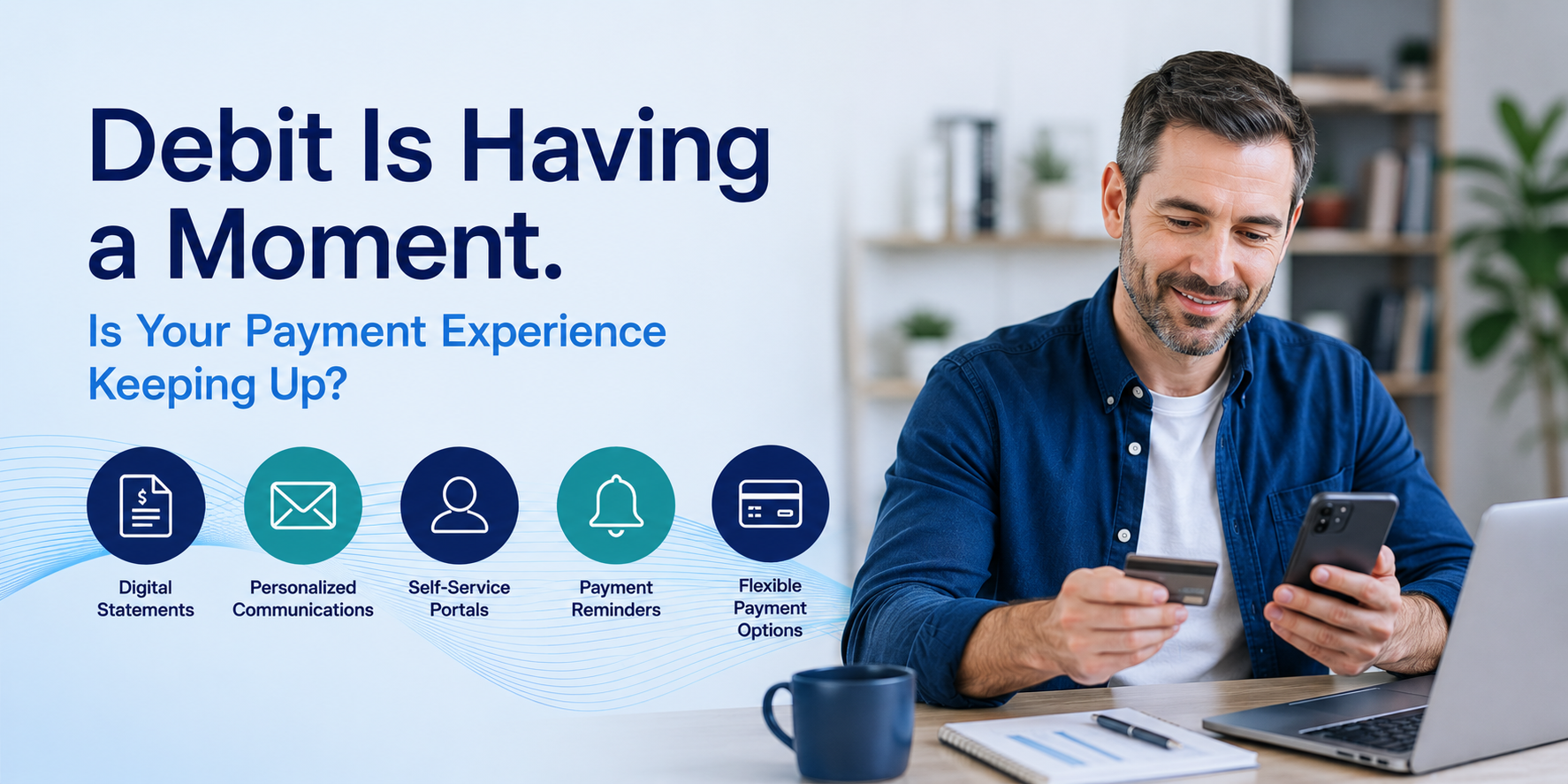
- Flexible payment options that meet customer preferences
Self-Service Continues to Gain Momentum
The research also highlights growing investment in self-service capabilities.
This trend is not surprising. Customers increasingly expect to access account information, review documents, update preferences, and make payments without contacting customer service.
For organizations, effective self-service can deliver measurable operational benefits.
When customers can independently find answers, review statements, and complete transactions, organizations often see:
- Reduced call center volume
- Lower servicing costs
- Faster payment completion
- Higher digital adoption
- Improved customer satisfaction
The challenge is ensuring that communications, account information, and payment experiences work together seamlessly.
Communications and Payments Are No Longer Separate Strategies
Historically, organizations often treated customer communications and payment systems as separate initiatives.
Today, that distinction is becoming less practical.
A payment reminder delivered through the right channel at the right time can encourage action. A well-designed statement can reduce confusion. A customer portal that combines document access with payment functionality can simplify the entire experience.
When communications and payments operate together, organizations create a clearer path from notification to action.
That is particularly important for regulated industries, where communications must balance customer experience, operational efficiency, and regulatory requirements.
Building a More Connected Billing-to-Payment Journey
As organizations evaluate future payment investments, the conversation is expanding beyond transaction processing. The ACI Speedpay Biller Impact Study reinforces a growing industry reality: payment success begins long before a customer clicks "Pay."
A connected billing-to-payment journey typically includes:
- Clear billing communications that help customers understand what they owe and when payment is due.
- Self-service tools and customer portals that make it easy to access documents, manage preferences, and review account information.
- Flexible payment options and reminders that support customer preferences and encourage timely action.
When these elements work together, customers have a clearer understanding of what they owe, why they owe it, and how to complete a payment. The result is often a smoother customer experience, greater digital adoption, and fewer barriers to payment.
Ready to Improve the Billing-to-Payment Experience?
DataOceans helps organizations modernize customer communications across print, digital, and self-service channels while creating a clearer path to payment.
Schedule a live demo to identify opportunities to improve customer engagement, increase self-service adoption, and streamline the billing-to-payment journey.