Communication governance is often viewed as a compliance requirement.
Policies. Approvals. Version control. Audit trails.
While these are certainly important, viewing communication governance through a compliance lens alone overlooks its broader business value.
In reality, strong communication governance improves operational efficiency, customer experience, and organizational agility. It also creates the foundation organizations need to adopt new technologies, including AI-assisted communication workflows with confidence.
Consistency Starts with Control
Regulated organizations manage hundreds, and sometimes thousands of customer communications:
- Statements
- Billing notices
- Payment reminders
- Collections correspondence
- Regulatory notices
- Servicing communications
Without centralized governance, these communications often evolve independently across departments, resulting in inconsistent language, outdated content, duplicate templates, and fragmented approval processes.
Over time, these inconsistencies increase operational complexity and make communication more difficult to manage.
Better Processes, Faster Communication Changes
Many organizations still rely on manual approval processes, email chains, spreadsheets, and shared drives to manage communication updates.
These processes slow down regulatory changes, increase the risk of errors, and make it difficult to determine which version of a communication is approved for use.
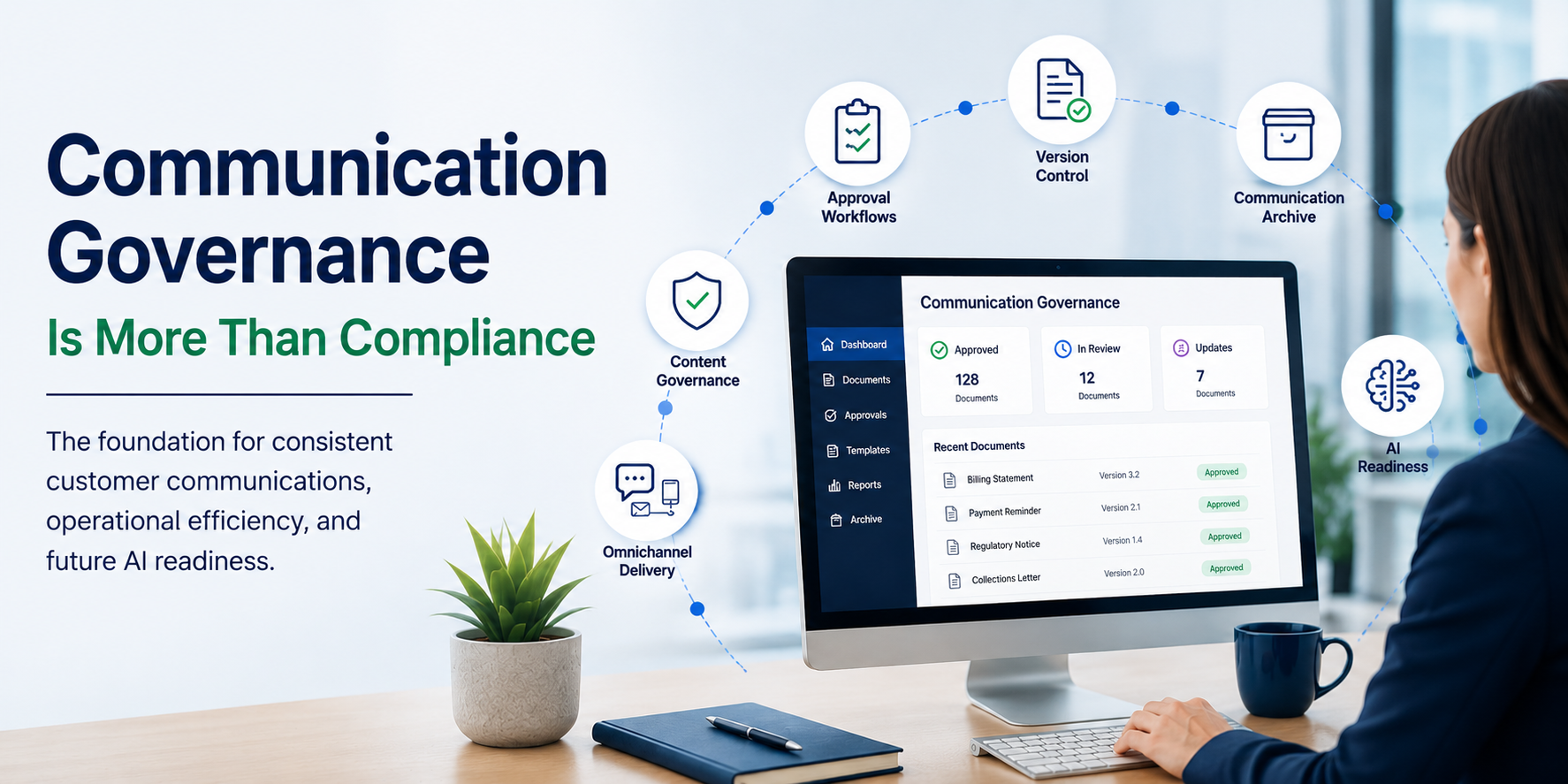
Centralized governance simplifies communication management by providing:
- Controlled approval workflows
- Version management
- Standardized templates
- Change tracking
- Communication archives
The result is faster updates, improved visibility, and fewer manual processes.
Consistent Communication Builds Customer Confidence
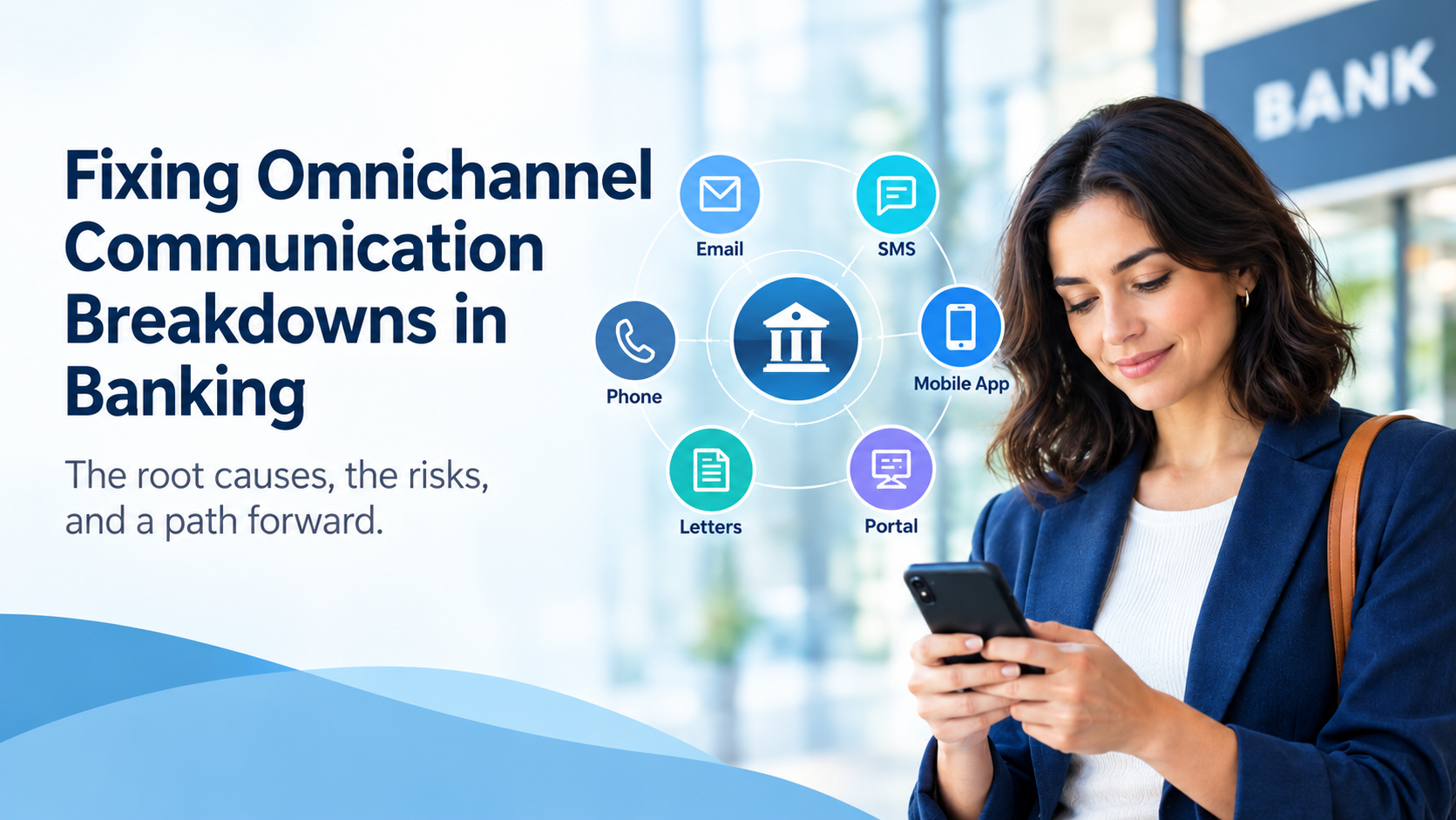
Customers expect communications to be clear, accurate, and consistent regardless of whether they receive them over the telephone, by mail, email, SMS, RCS, or through a customer portal.
When communications vary across multiple channels and contain conflicting information, customer confidence can quickly erode.
Governance helps ensure every communication reflects approved content and is delivered consistently across every customer touchpoint.
The Foundation for Future AI Adoption
Organizations across regulated industries are evaluating AI to improve efficiency within customer communication workflows.
But AI doesn't replace governance; it increases the importance of governance to help reduce risk and confusion.
Organizations that already maintain centralized content management, documented approvals, version control, and communication oversight will be far better positioned to introduce future AI-assisted capabilities while maintaining accountability and control.
Governance Is a Business Capability
Strong communication management isn't simply satisfying regulatory requirements. It creates a repeatable framework that helps organizations improve operational efficiency, deliver a more consistent customer experience, and confidently adopt new technologies as they emerge.
As communication volumes grow and customer expectations continue to evolve, organizations that invest in strong governance foundations today will be better positioned for whatever comes next.
Is your customer communications strategy ready for what's next?
Download our free eBook, Governance-Ready Customer Communications in the Age of AI, to explore the five pillars of communication governance and learn how regulated organizations are preparing for AI-assisted communication workflows.
Frequently Asked Questions
1. What is communication governance?
Communication governance is the framework of policies, processes, and controls used to manage customer communications throughout their lifecycle. It helps organizations ensure communications are accurate, consistent, approved, and traceable across every delivery channel.
2. Why is communication governance important?
Communication governance helps organizations improve operational efficiency, maintain consistent customer communications, simplify regulatory updates, and reduce the risk of outdated or unapproved content being distributed.
3. How does communication governance improve the customer experience?
When communications are managed through a centralized governance framework, customers receive clear, consistent, and accurate information across print, email, SMS, RCS messaging, and customer portals. This helps build confidence and reduces confusion.
4. How does communication governance support future AI adoption?
As organizations introduce AI into customer communication workflows, governance provides the oversight needed to maintain approved content, version control, documented approvals, and communication history. This creates a stronger foundation for future AI-assisted communications.
5. How does DataOceans help organizations strengthen communication governance?
DataOceans provides configurable workflows, centralized content management, version control, approval workflows, communication archives, and omnichannel delivery capabilities that help organizations manage customer communications more efficiently while maintaining consistency and control.