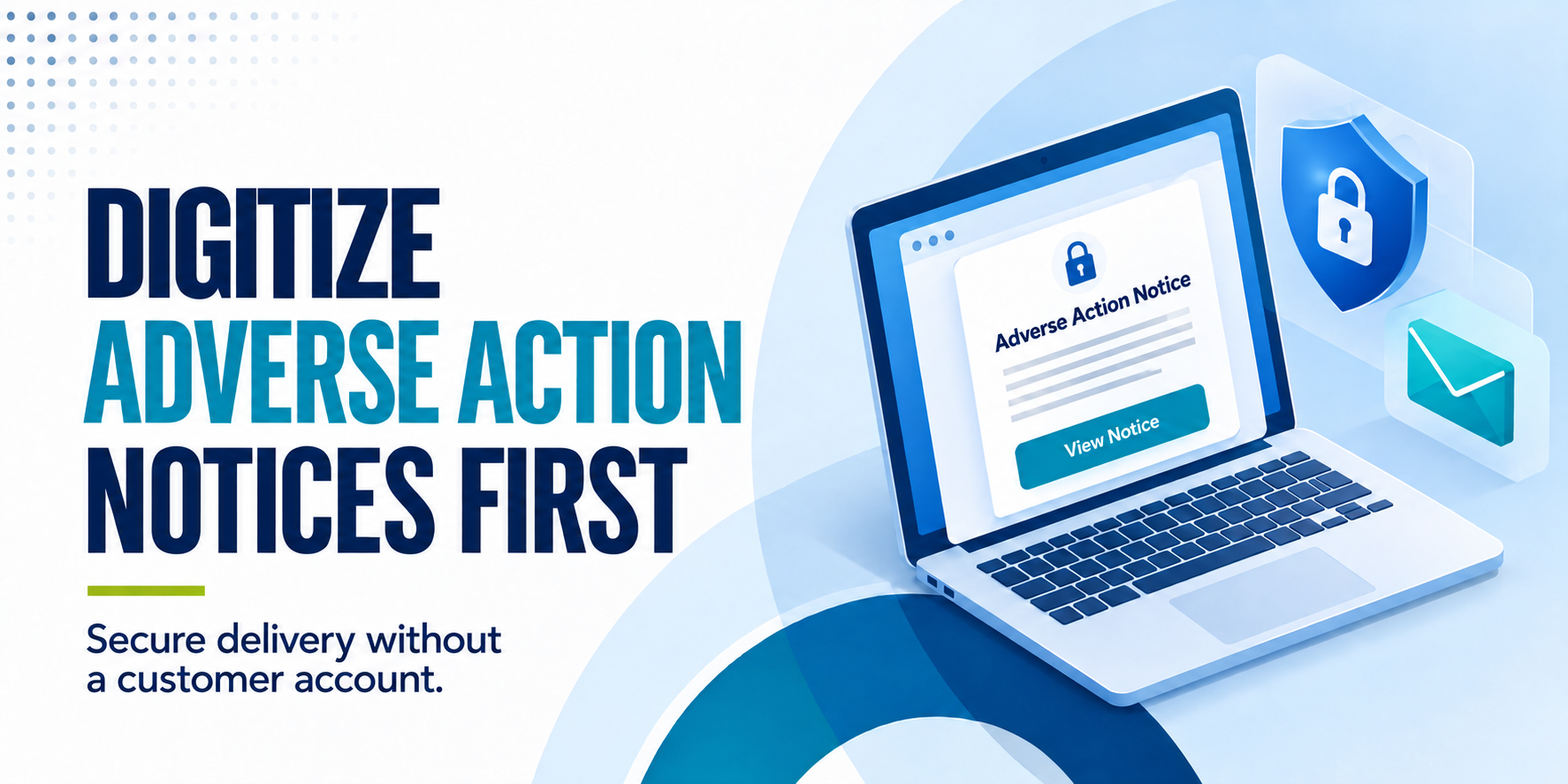
Moving AA notices to secure digital delivery can reduce reliance on print and help applicants access important information sooner, including those without a customer account. They have defined content requirements, delivery deadlines, and measurable fulfillment costs.
This focused project can also provide a foundation for broader communication modernization.
Adverse Action Notices Are a Key Communication
For many applicants, an AA notice is one of the few formal communications an unsuccessful applicant may ever receive from a lender.
It explains an important lending decision and often shapes a lasting impression of the organization.
For lenders, these notices are business-critical. They must be accurate, timely, and compliant with regulatory requirements while supporting operational efficiency.
Although they represent a relatively small part of the overall borrower's journey, they often carry a disproportionate level of operational importance.
Why are Adverse Action Notices Still Printed and Mailed to Applicants?
Despite the rapid growth of digital lending, many Adverse Action notices are still printed and mailed.
Historically, this made sense.
Applicants who receive an AA notice are often not existing customers. They typically do not have an online account, customer portal access, or established login credentials, making print the simplest delivery option.
However, the lending landscape has changed significantly.
Today's applicants expect digital experiences from the moment they begin an application. Completing the entire process online, only to receive the final lending decision by mail days later, creates a frustrating disconnect in what should feel seamless.
How Digital Delivery Works Without a Customer Account
Modern digital delivery solutions can securely deliver Adverse Action notices without adding unnecessary complexity for applicants.
Applicants do not necessarily need a customer portal account to access a digital adverse action notice. A secure delivery process can provide access to the individual document, with verification appropriate to the information it contains. Lenders should evaluate how the process handles electronic delivery consent.
Instead of viewing digital delivery as a replacement for paper, lenders can use it to improve the overall communication experience:
- Digital delivery can make important information available sooner.
- Operational teams reduce their reliance on print and manual fulfilment processes.
- Organizations gain records of notice generation, delivery attempts, and document access, where supported and an audit trail.
The communication experience then becomes more closely aligned with the digital lending journey borrowers are increasingly expecting.
What Makes Digitizing Adverse Action Notices a Practical First Project?
Communication modernization doesn't have to begin with every communication.
Adverse action notices may be a suitable first project when a lender has recurring notice volume, substantial paper fulfillment costs, and a clearly defined process.
Then identify what can be measured:
- Digital delivery adoption: The share of eligible notices delivered electronically.
- Fulfillment cost: Print, postage, digital delivery, and exception handling costs.
- Processing time: The time between notice generation and dispatch.
- Applicant access: Whether and when recipients access their notices, where supported.
- Exceptions: Failed delivery attempts and notices requiring paper fulfillment.
Successfully modernizing one communication creates momentum and provides valuable experience that can often be applied to other borrower communications, including statements, payment reminders, servicing communications, and regulatory notices.
Applying the Lessons to Other Borrower Communications
As organizations continue investing in digital delivery, self-service, and borrower experience improvements, every communication should help borrowers understand what has happened, what comes next, and how to complete the next step with confidence.
That's the difference between simply digitizing documents and modernizing borrower communications.
Ready to Take Adverse Action Notices Digital?
See how DataOceans helps lenders securely deliver adverse action notices to applicants without requiring an app, customer account, or login credentials.

Frequently Asked Questions
Why are adverse action notices a practical starting point for communication modernization?
Adverse action notices have defined content requirements, delivery deadlines, and a specific operational purpose. For lenders that regularly print and mail these notices, introducing digital delivery provides a focused project with measurable costs and results. The experience gained can help lenders modernize other borrower communications.
Can lenders deliver adverse action notices electronically?
Yes. Regulation B permits required written disclosures to be provided electronically, subject to the consumer consent and other applicable provisions of the E-SIGN Act. Lenders must also meet the applicable notice content and timing requirements and provide disclosures in a form the applicant can retain.
Can applicants access digital adverse action notices without a customer account?
Yes. Secure document delivery can give applicants access to an individual notice without requiring them to create a customer portal account. Depending on the solution, applicants may verify their identity before viewing or downloading the document. Secure access and electronic delivery consent are separate requirements that lenders should address in the delivery process.
What are the benefits of digitizing adverse action notices?
Digital delivery can reduce print and postage costs, make notices available sooner, and reduce manual fulfillment work. Depending on the solution, lenders can also gain visibility into delivery attempts and document access. The results depend on how many applicants are eligible for electronic delivery and how the lender handles unsuccessful delivery attempts.
What should lenders measure when modernizing adverse action notices?
Lenders should measure the share of eligible notices delivered electronically, fulfillment cost per notice, time from notice generation to dispatch, and delivery exceptions requiring paper fulfillment. Document access rates can provide additional information where tracking is supported. Establishing a baseline before implementation makes it easier to assess the results.

Frequently Asked Questions
Does eDelivery increase digital payments?
eDelivery can support digital payment adoption by giving customers faster access to account information and a more direct route to self-service.
Is there evidence that eDelivery leads to more payments?
The data shows a strong correlation between electronic statement volume and digital card payments. Other factors may also affect payment behavior, including payment choices, customer preferences, and the self-service experience.
How does eDelivery improve the payment journey?
eDelivery allows customers to receive statements sooner, access account information digitally, and proceed more easily to an available payment option.
What is a connected billing-to-payment journey?
A connected billing-to-payment journey brings statement delivery, account access, self-service, and payment options together so customers have a clear route from bill receipt to action.
Which metrics should organizations track?
Organizations should monitor eDelivery adoption, electronic statement volume, enrollment completion, statement access, digital payment activity, print volume, and customer abandonment points.