Consumers are changing how they pay.
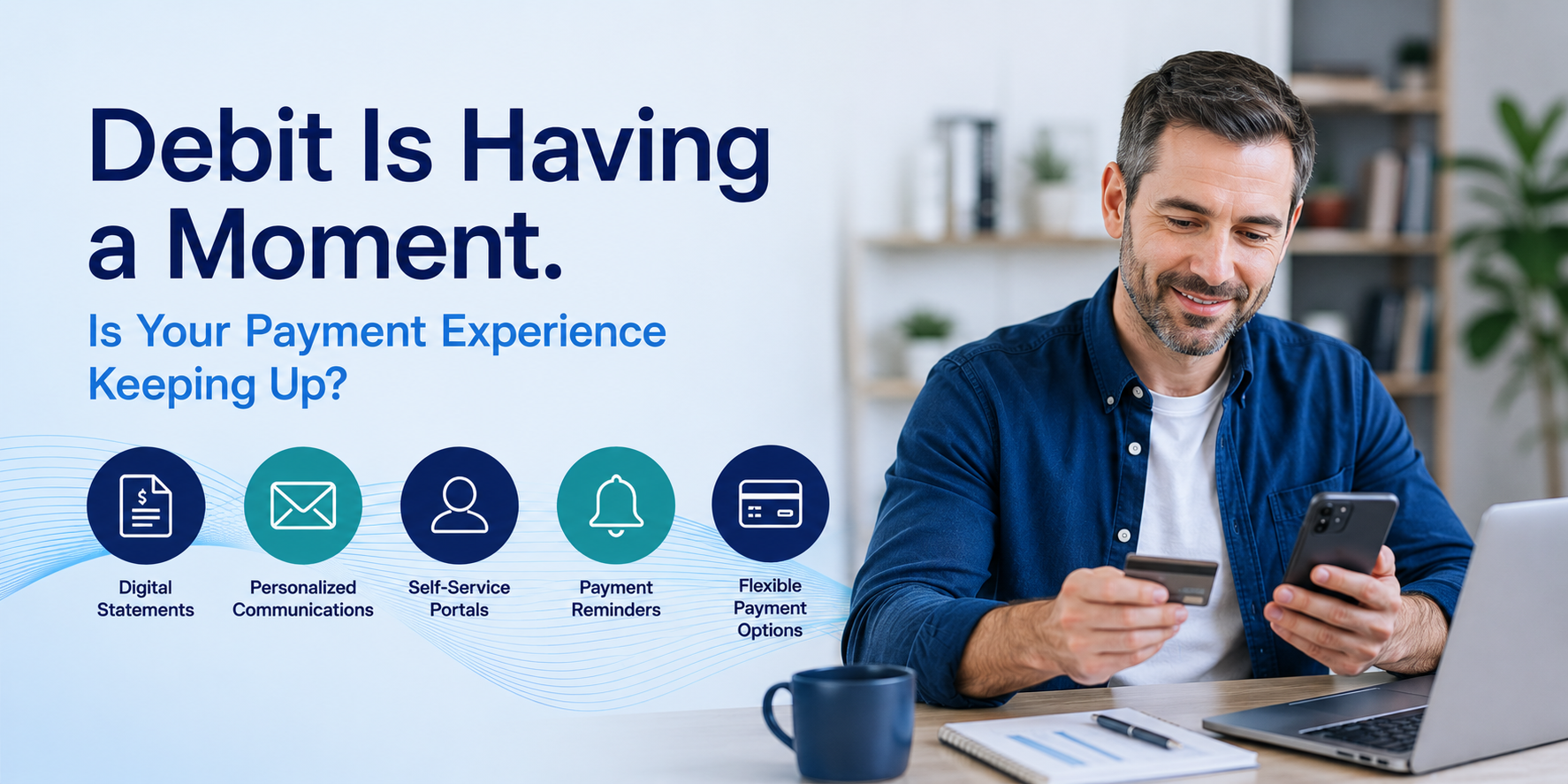
According to ACI Worldwide's latest Speedpay Pulse research, debit card usage continues to rise as consumers look for greater control over spending and lower transaction costs. Debit was used by 52.7% of consumers for bill payment, with the preference particularly strong among Gen X, Millennials, and Gen Z.
Whether customers prefer debit, ACH, digital wallets, or other payment methods, they expect organizations to offer payment choices that fit their needs, but expanding choices is only part of the equation to keeping customers happy.
Customers rely on billing statements, payment reminders, digital notifications, and self-service portals to understand what they owe and to access those payment options. As payment capabilities continue to evolve, the customer-facing experience should evolve alongside them, creating a simpler, more connected journey from bill to on-time payment.
Organizations that align customer communications with modern payment capabilities are better positioned to reduce friction, encourage digital adoption, and deliver the seamless experiences customers increasingly expect.
What Does a Connected Bill-to-Payment Experience Look Like?
A national health insurer worked with DataOceans to bring previously separate billing and payment processes into one connected member experience.
Members had received multiple bills with different due dates, which made it difficult to understand their total responsibility and complete payments. DataOceans helped the organization introduce consolidated billing, a single due date, and connected member and customer service portals.
The results included:
- More than 60% electronic adoption
- A 75% reduction in call handling time
- Lower billing and payment transaction costs
- A simpler experience for members and customer service representatives
The results show the value of connecting billing, communications, self-service, and payments. When customers can clearly understand what they owe and move easily from viewing a bill to taking action, organizations can increase digital adoption while reducing servicing effort and costs.
[Read the health insurer case study.]
Why Payment Modernization Requires a Better Customer Experience
ACI Worldwide's research found that 76% of bill pay organizations plan to evaluate new payment solutions over the next two years.
Expanding payment choices is an important investment. However, payment technology alone doesn't create a better customer experience.
Customers also need clear communications, easy-to-use self-service, and a straightforward way to move from receiving a bill to making a payment.
Without that connected experience, even the most advanced payment capabilities may go underutilized.
What Makes a Good Bill-to-Payment Experience?
A good bill-to-payment experience makes it easy for customers to understand what they owe, find the information they need, and take action.
- Is the bill easy to understand?
- Can customers quickly find the information they need?
- Can they view statements digitally?
- Can they access their account through a self-service portal?
- Can they move easily from viewing a bill to making a payment?
A connected bill-to-payment experience brings together:
- Clear, personalized customer communications
- Digital bill presentment
- Self-service account management
- Flexible payment options
- Consistent experiences across print and digital channels
Every interaction shapes the overall experience.
Connecting customer communications, digital presentment, self-service, and payments gives customers a clearer path from receiving a bill to completing a payment. It can also help organizations increase digital adoption and improve operational efficiency.
When these elements work together, customers spend less time searching for information and encounter fewer barriers when they are ready to pay.
The Future of Payments Is About More Than Just Payment
Changing payment preferences is a reminder that customer expectations continue to evolve.
Organizations that focus only on adding new payment methods may overlook the bigger opportunity.
The larger opportunity is to make the entire journey, from receiving a bill and accessing account information to choosing a payment method and completing the payment, easier for the customer.
By connecting modern payment capabilities with customer communications and digital self-service, organizations can better meet customer expectations while supporting digital adoption and operational efficiency.
Let's help you boost your bill-to-payment experience!
DataOceans has partnered with ACI Worldwide since 2017, helping organizations connect customer communications and digital self-service with modern payment capabilities. Together, our solutions support the journey from statements and digital bill presentment to self-service, payment reminders, and payment.
Schedule an assessment with DataOceans. We'll review your current bill-to-payment journey, including statements, digital communications, self-service, and portal experiences to identify opportunities that align with today's customer expectations.
FAQs
Why are more consumers choosing debit over credit?
According to ACI Worldwide's Speedpay Pulse research, 64% of consumers say they would choose debit over credit to avoid fees. The preference is particularly strong among Gen X, Millennials, and Gen Z.
What does debit growth mean for organizations?
The growth of debit reflects changing customer expectations. Customers increasingly expect flexible payment options, digital convenience, and simple self-service experiences throughout their interactions with an organization.
Is payment technology alone enough to improve customer experience?
No. Payment options are only one part of the experience. Customers also need clear communications, easy access to account information, digital self-service, and a simple way to move from receiving a bill to making a payment.
Why should customer communications and payments be connected?
Customer communications tell customers what they owe, when payment is due, and what action they need to take. Connecting those communications with digital self-service and payment options gives customers a clearer path from receiving a bill to completing a payment.
What is a bill-to-payment experience?
The bill-to-payment experience covers the interactions that help a customer understand what they owe and complete a payment. This can include billing statements, digital notifications, payment reminders, self-service portals, digital bill presentment, and access to payment options.
Why is the bill-to-payment experience important?
A connected bill-to-payment experience can make it easier for customers to understand what they owe, find information, and make payments. For organizations, it can support greater digital adoption, increased self-service, and improved operational efficiency..